

Why Choose Meadowbrook Dental Studio For Gentle Dentistry Near You?
Under the compassionate guidance of Dr. Clark, our dental office in Prairie Village focuses on creating an environment where you feel heard, respected, and completely at ease. From the moment you step into our office, you’ll notice the difference our patient-centered approach makes. We take the time to explain every procedure, answer all your questions, and work with you to develop treatment plans that align with your needs and preferences.
Our team is dedicated to employing techniques and technologies that minimize discomfort, making every visit as pleasant as possible when wisdom teeth erupt. Ready to experience gentle dentistry with us? Call Meadowbrook Dental Studio today at (913) 362-4488 to schedule your visit!
What Are Wisdom Teeth?
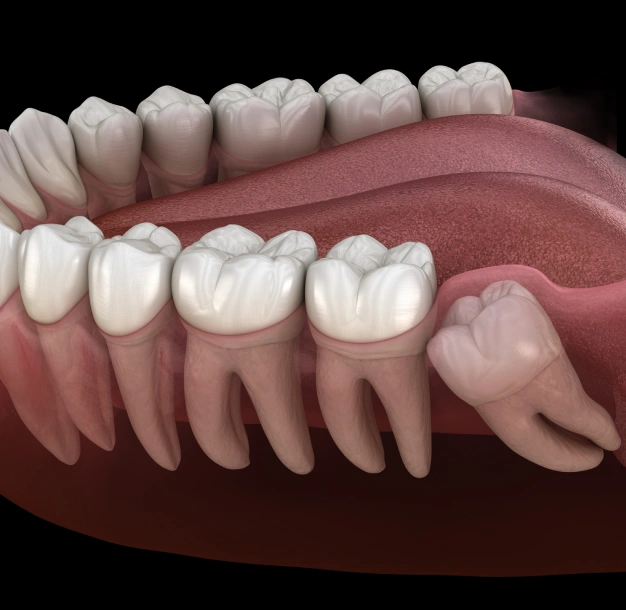
Wisdom teeth are a natural part of human dentition, but their late arrival in jaws that may lack sufficient space often leads to complications. When these molars attempt to erupt in an already crowded mouth, they can become “impacted,” meaning they are trapped beneath the gum line or bone, unable to emerge fully or in proper alignment. Impacted wisdom teeth are commonly extracted, which involves removing wisdom teeth, to treat or prevent problems. This impaction can lead to several oral health issues, making their removal a common and often necessary dental procedure.
Signs You May Need Wisdom Teeth Removed
Here are some common reasons why Dr. Clark might recommend wisdom tooth removal:
- Impaction and Pain: When a wisdom tooth becomes impacted, it can push against adjacent teeth, causing significant pain, pressure, and discomfort.
- Crowding and Misalignment: Even when wisdom teeth erupt properly, they may contribute to crowding or alignment issues. This can affect your bite and smile and may interfere with previous orthodontic treatment.
- Cysts and Tumors: In rare cases, an impacted wisdom tooth can lead to the development of cysts or benign tumors around the affected tooth.
- Damage to Neighboring Teeth: An impacted wisdom tooth can place pressure on an adjacent molar, potentially contributing to root damage or decay that may be difficult to treat.
- Increased Risk of Decay: Partially erupted wisdom teeth can be difficult to clean effectively. Food particles and bacteria may become trapped around the tooth, increasing the risk of decay in both the wisdom tooth and the neighboring molar.
Dr. Clark emphasizes a proactive approach, identifying potential problems early to mitigate future complications. Wisdom teeth extraction is often performed to prevent future dental problems, such as crowding, tooth decay, or infection. Call (913) 362-4488 for a consultation if you experience any of these symptoms.
The Wisdom Tooth Removal Process in Prairie Village
Aftercare for Wisdom Tooth Surgery
The First 24 Hours: A Gentle Beginning
The initial 24 hours following your wisdom tooth removal are crucial for establishing a good healing environment.
- Bleeding Management: It’s normal to experience some bleeding or oozing from the extraction sites. Keep gentle, consistent pressure on the gauze pads placed in your mouth for about 30–45 minutes after leaving our office.
- Pain Relief: You will likely experience some discomfort as the anesthesia wears off. Dr. Clark may prescribe pain medication or recommend over-the-counter pain relievers like ibuprofen or acetaminophen. Take these as directed to manage your pain effectively.
- Swelling Reduction: Swelling is a common response to oral surgery. Apply an ice pack to the outside of your face over the surgical areas for 20 minutes on and 20 minutes off during the first 24–48 hours.
- Dietary Choices: Stick to soft, cool foods during the first day. Options may include yogurt, applesauce, pudding, smoothies without a straw, and lukewarm soup.
- Avoid Straws and Smoking: The sucking motion created by using a straw or smoking can dislodge the blood clot from the socket, leading to a painful condition called dry socket. Avoid straws and smoking as directed after wisdom teeth removal.
Days 2-7: Steady Progress
As you move past the first 24 hours, you’ll generally start to feel better, but continued care is essential. Recovery time after wisdom teeth removal takes one to two weeks on average.
- Oral Hygiene: Gentle oral hygiene is vital. Beginning 24 hours after surgery, gently rinse your mouth with warm salt water (½ teaspoon of salt in 8 ounces of warm water) several times a day.
- Diet Expansion: Gradually reintroduce more solid foods into your diet as your comfort allows. Continue to avoid hard, crunchy, or difficult-to-chew foods that could irritate the healing sites.
- Continue Swelling Management: While ice packs are most effective during the first 48 hours, some residual swelling may persist. Heat packs may be introduced after 48 hours if needed to help improve blood flow and reduce swelling.
- Activity Levels: You can gradually resume normal, light activities, but continue to avoid strenuous exercise or activities until advised otherwise.
- Medication Adherence: Continue taking any prescribed medications as directed by Dr. Clark. If antibiotics are prescribed, finish the entire course as directed, even if you begin to feel better.
Beyond the First Week: Full Recovery
Full healing of the wisdom tooth extraction site can take several weeks, but the acute symptoms typically subside within seven to 10 days.
Costs
The cost of wisdom tooth removal can range from $200 to $4,000 per tooth, depending on certain factors and whether or not insurance coverage is available. Consulting your dental insurance provider to determine your coverage for wisdom tooth removal is advisable since it can vary based on your specific policy and dental condition. By understanding your insurance coverage, you can make informed decisions about your dental care and be prepared for any out-of-pocket expenses.
- Pocket Closure: The socket where the tooth was removed will gradually fill in with new bone and tissue. This process takes time, and you may notice a small indentation for a while.
- Oral Hygiene: You can gradually return to your regular brushing and flossing routine while remaining mindful of the healing areas.
- Follow-Up Appointment: Dr. Clark may schedule a follow-up appointment, usually one to two weeks after your surgery, to assess your healing progress and remove any non-dissolvable stitches if necessary.
Get Back to Smiling Without Pain With Gentle Wisdom Removal
Don’t let the uncertainty surrounding wisdom teeth linger. Take the first step towards a healthier, more comfortable smile. Connect with Meadowbrook Dental Studio today. Dr. Clark and our compassionate team are ready to answer your questions and guide you with exceptional care. We welcome patients from Overland Park, Leawood, and Mission.
Your well-being is our priority. Call our dentist in Prairie Village at (913) 362-4488 to schedule your consultation and discuss your wisdom tooth needs.
Frequently Asked Questions
The duration of the procedure varies depending on the complexity of the impaction and the number of teeth being removed. A single, straightforward extraction might take as little as 20 to 30 minutes, while more complex cases involving multiple impacted teeth could take longer. Dr. Clark will provide an estimate during your consultation.
Not necessarily. We offer a range of anesthesia options to suit your comfort level. For some, local anesthesia is sufficient. For others, sedation options like nitrous oxide or IV sedation can help you feel relaxed and unaware of the procedure. Dr. Clark will discuss the best option for you.
Initially, a diet of soft foods and liquids is recommended. This includes items like yogurt, smoothies, applesauce, mashed potatoes, and soups (cooled). As you heal, you can gradually reintroduce more solid and hard foods. Our team will provide specific dietary guidelines to promote proper healing.
Most individuals can resume light activities within 24 to 48 hours. However, it’s advisable to avoid strenuous physical activity, heavy lifting, or anything that could dislodge the blood clot for at least three to five days. Most people can resume work or school three to five days after wisdom teeth removal. Your oral and maxillofacial surgeons will provide guidance at your consultation for upper wisdom teeth removal.

